
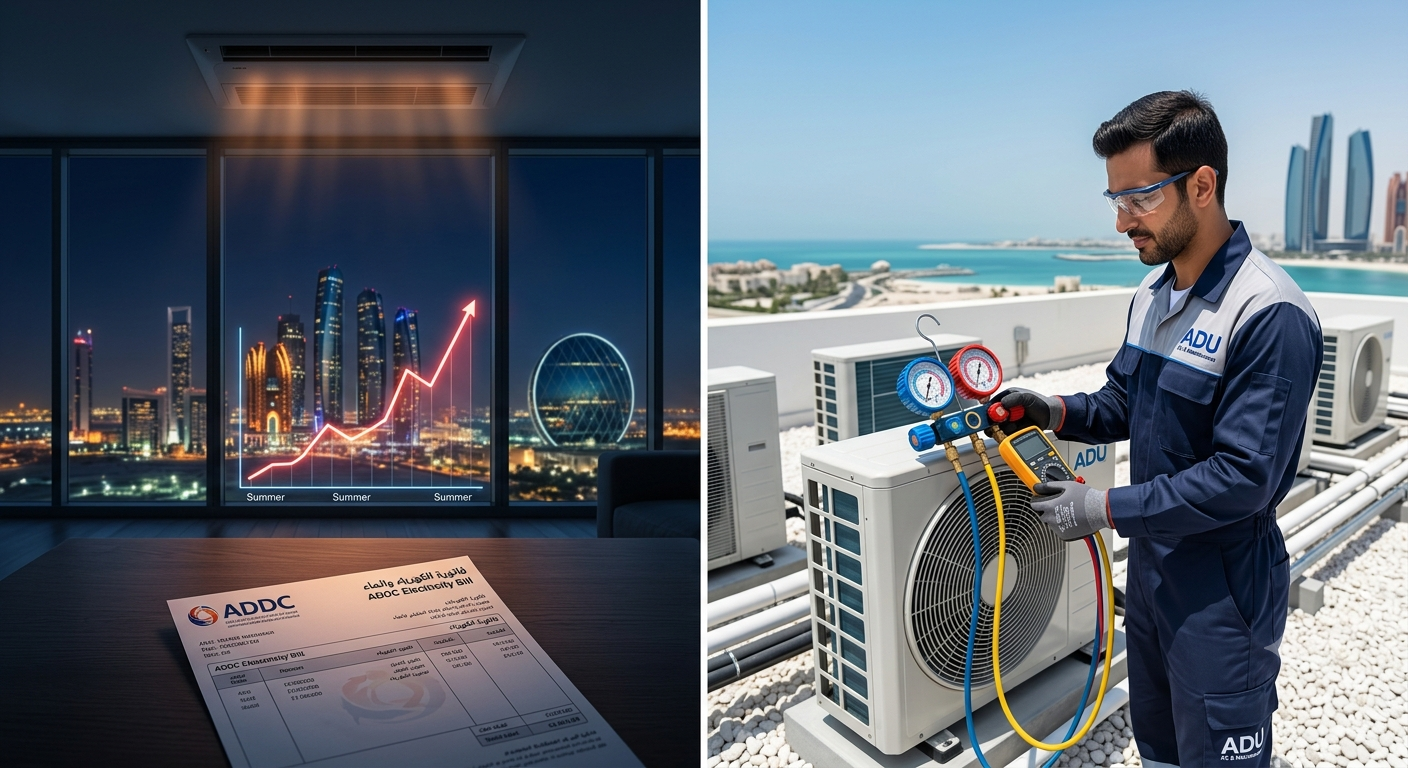
If your ADDC bill has been creeping up every summer despite using your AC the same way you always have, the culprit might not be your habits at all — it could be low refrigerant (gas) levels inside your air conditioning system. In Abu Dhabi’s punishing heat, an AC unit running low on gas has to work significantly harder to cool the same space, quietly driving up your electricity consumption month after month.
Here’s how AC gas refilling works, why it directly affects your ADDC bill, and how often you should be checking your refrigerant levels to keep your cooling costs under control.
What AC Gas Actually Does
Refrigerant (commonly called “AC gas” or “Freon”) is the substance that circulates through your air conditioner’s coils, absorbing heat from indoor air and releasing it outside. It doesn’t get “used up” during normal operation — a properly sealed AC system should hold the same refrigerant charge for years.
However, refrigerant levels drop when there’s a leak somewhere in the system, whether from worn seals, corroded coils, loose fittings, or general wear on older units. Once refrigerant is low, the AC can no longer transfer heat efficiently, and that’s when your electricity bill starts climbing.
The Direct Link Between Low Gas and High ADDC Bills
When refrigerant levels drop even slightly below the manufacturer’s recommended charge, several things happen at once:
The compressor works harder to try to achieve the same cooling output, drawing significantly more power
Cooling takes longer, so the AC runs for extended cycles instead of shutting off once the room reaches temperature
The evaporator coil can frost or ice up, further reducing efficiency and forcing the system to run even longer
The unit may never fully reach the thermostat’s set temperature, causing it to run almost continuously
In practical terms, HVAC technicians in the UAE commonly report that a unit running on low refrigerant can consume 20–30% more electricity than a properly charged system cooling the same space. Multiply that across a two- or three-bedroom villa or apartment running AC for 10+ months a year, and the difference on your ADDC bill becomes substantial.
Why This Matters More in Abu Dhabi Specifically
Abu Dhabi’s climate makes refrigerant issues especially costly:
Extreme summer temperatures (often 45°C+) mean AC units already operate near their performance limits — any inefficiency is magnified
Long cooling seasons, with many households running AC nearly year-round
High humidity, particularly in coastal and island areas, which adds to the cooling load and exposes any inefficiency in the refrigerant cycle
ADDC’s tiered tariff structure, where higher consumption can push households into higher billing slabs, meaning inefficient cooling doesn’t just cost more per kWh — it can shift your entire bill into a more expensive bracket
Signs Your AC Is Low on Gas
You don’t need to wait for your bill to spike to catch a refrigerant problem. Watch for:
Warm or inconsistent airflow from vents, even with the thermostat set low
Longer cooling times than usual to reach a comfortable temperature
Ice or frost forming on the indoor unit, refrigerant lines, or outdoor coil
Hissing or bubbling sounds near the AC unit, often a sign of an active leak
The compressor running constantly without cycling off
A noticeable jump in your ADDC bill without any change in usage patterns or occupancy
If you notice any of these, it’s worth having a technician check refrigerant pressure before the problem worsens or the compressor sustains damage.
How Often Should You Check or Refill AC Gas?
Unlike duct cleaning, which follows a routine schedule, refrigerant refilling is not something that should be done on a fixed timeline if your system has no leak. A correctly sealed AC unit shouldn’t need a “top-up” every year — needing frequent refills is actually a red flag that there’s a leak that needs to be repaired, not just masked with more gas.
That said, general guidance for UAE residents looks like this:
| Situation | Recommended Action |
| New or recently serviced AC, no symptoms | Annual refrigerant pressure check as part of routine AC servicing |
| AC unit older than 7–10 years | Check every 6–12 months, as seals and coils degrade with age |
| Noticeable drop in cooling performance | Immediate inspection, regardless of last check date |
| Frequent refrigerant top-ups in past years | Full leak detection and repair, not just another refill |
| Central AC systems in villas | Annual check bundled with full HVAC maintenance |
| Split units in apartments | Every 12 months, or sooner if performance drops |
Refilling Gas vs. Fixing the Real Problem
It’s important to understand that topping up refrigerant without fixing the leak is a temporary and costly fix. Some technicians will offer a quick gas refill without diagnosing why the level dropped in the first place — this might restore cooling for a few months, but the gas will leak out again, and you’ll be paying for repeat refills while still suffering inflated electricity bills in between visits.
A proper service should include:
Leak detection using UV dye, electronic leak detectors, or nitrogen pressure testing
Repair of the leak source (coil, fitting, valve, or line)
Vacuuming the system to remove air and moisture before recharging
Refilling to the manufacturer’s exact specified charge — both overcharging and undercharging hurt efficiency
Post-service performance check to confirm the system is cooling and cycling correctly
Other Ways Gas Refilling Ties Into Overall AC Efficiency
Refrigerant levels don’t work in isolation — they interact with other maintenance factors that also affect your ADDC bill:
Dirty filters or ducts force the system to work harder even with correct refrigerant levels, compounding electricity waste
Poor insulation or unsealed ductwork lets cooled air escape, meaning the compressor runs longer regardless of gas charge
Outdoor unit placement in direct sun or blocked airflow areas reduces heat dissipation efficiency
Thermostat settings and usage habits still matter — even a perfectly charged system uses more power at very low set temperatures
For the best results, refrigerant checks should be part of a broader annual AC maintenance visit rather than treated as a standalone fix.
Estimated Savings From Proper Gas Levels
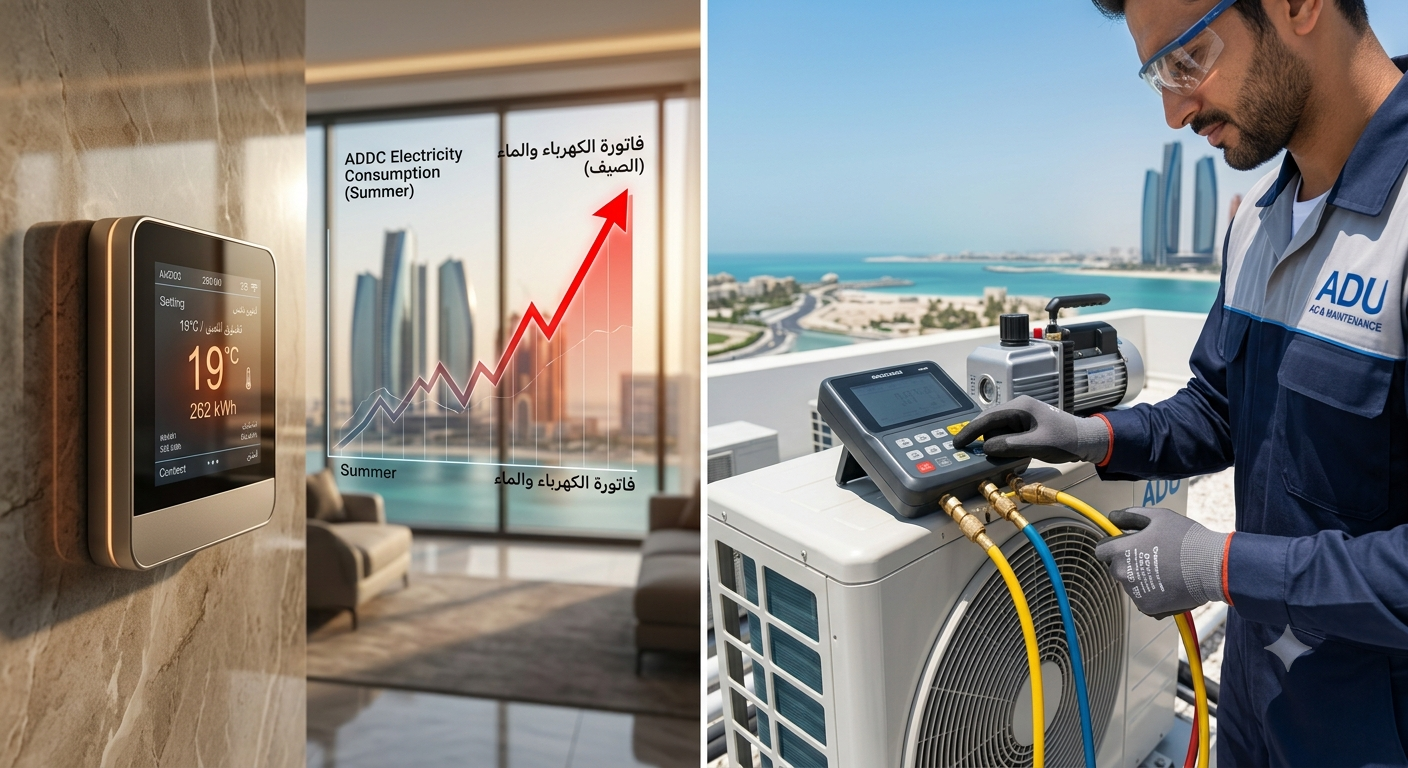
While exact figures vary by unit size, home layout, and usage patterns, UAE HVAC technicians generally report that correcting a significant refrigerant deficiency can reduce an AC’s electricity draw by 15–30%. For a typical Abu Dhabi household running central AC through the summer, that can translate into meaningful monthly savings on the ADDC bill, along with:
Faster cooling and more consistent indoor temperatures
Reduced strain on the compressor, extending the unit’s lifespan
Fewer emergency breakdowns during peak summer months
Lower risk of costly compressor replacement caused by long-term low-refrigerant operation
Choosing the Right AC Service Provider in Abu Dhabi
When booking a gas refill or refrigerant check, look for a provider that:
Holds a valid trade license for HVAC/AC maintenance in Abu Dhabi
Performs proper leak detection rather than jumping straight to a refill
Uses manufacturer-approved refrigerant types (many older systems use R-22, while newer ones require R-410A — using the wrong type can damage the compressor)
Provides a written report of pressure readings, leak location (if found), and repair work completed
Offers before-and-after performance data, not just a verbal assurance that “it’s fixed now”
Final Takeaway
Low refrigerant is one of the most overlooked — and most expensive — inefficiencies in UAE air conditioning systems. Because a low-gas AC unit has to work far harder to deliver the same cooling, the effect shows up directly on your ADDC bill, often before any other symptom becomes obvious.
The key points to remember:
Refrigerant shouldn’t need frequent refilling — if it does, you likely have a leak that needs repair, not just a top-up
Annual checks as part of routine AC servicing are enough for most well-maintained systems
Watch for warning signs like weak cooling, longer run times, or unexplained bill increases
Fixing leaks properly, rather than repeatedly refilling gas, delivers the real long-term savings
Pairing correct refrigerant levels with clean ducts, clean filters, and well-maintained outdoor units gives you the most efficient — and most affordable — cooling setup possible in Abu Dhabi’s demanding climate.
Leave a Reply